
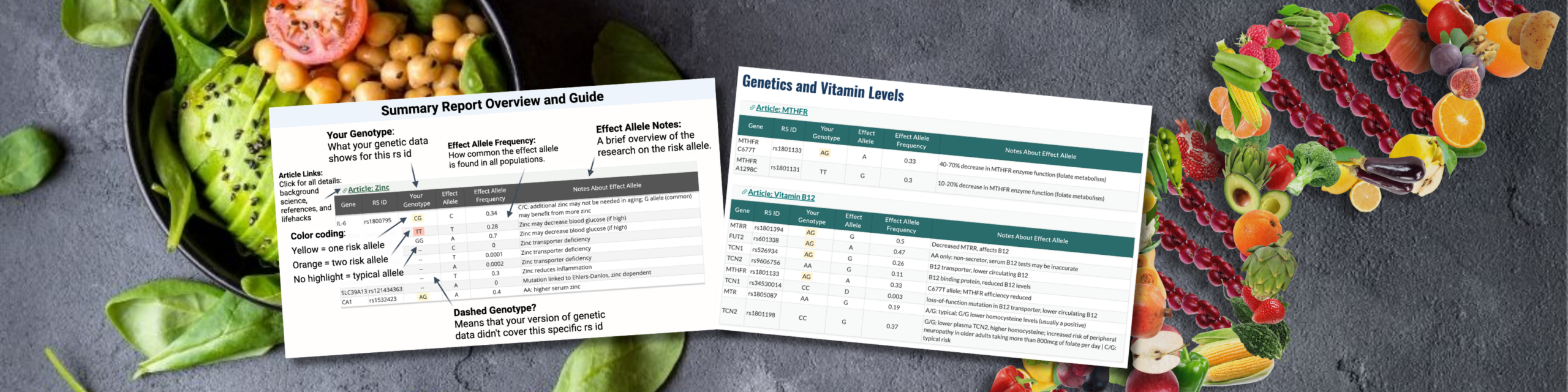
If you’ve taken a DNA test through 23andMe, AncestryDNA, or MyHeritage, you already have access to something incredibly valuable: your raw genetic data. This is a data file that you can download — it is your data to use and keep. And when you combine it with current genetics research, it can reveal actionable insights about your health.
With your raw genetic data, you can find out your susceptibility to chronic diseases, discover which nutrients your body may need more of, check for genetic variants that affect medications, and optimize diet and lifestyle.
Here’s a closer look at each of these — and how to get started.
How to Get Your Raw Genetic Data
Before you can do anything with your genetic data, you need to download the raw data file from the testing company. Be sure to save it somewhere secure.
- Here’s how to download your data from 23andMe.
- Here’s how to download from AncestryDNA.
Your raw data file contains hundreds of thousands of genetic variants (called SNPs). Many of these SNPs are ones that researchers have studied in connection with everything from nutrient metabolism to disease risk. The articles below explain what those variants mean and what you can do about them.
1. Optimize Your Nutrition Based on Your Genes
One-size-fits-all dietary advice doesn’t account for genetic differences in how people absorb and use nutrients. Your DNA can reveal whether you need to pay extra attention to specific vitamins and minerals.
Folate and MTHFR variants:
Variants in the MTHFR gene are among the most well-studied in nutrigenomics. They affect how efficiently your body converts folate into its active form, methylfolate. If you carry certain MTHFR variants, you may benefit from increasing your dietary folate or choosing the right form of supplementation.
Read more about MTHFR and folate →
Vitamin B12 metabolism:
Genetic variants can influence how well you absorb and transport B12. Some people need higher dietary intake from animal sources or supplements, even if standard blood tests look normal.
Learn about B12 and your genes →
Histamine intolerance:
The DAO and HNMT enzymes break down histamine in the body. Knowing your genetic susceptibility can help you find the foods that are likely to cause problems – and find natural solutions.
Find out about histamine intolerance →
Vitamin A conversion:
Your body converts beta-carotene from plants (like carrots and sweet potatoes) into active vitamin A, but how well it does this depends on variants in the BCMO1 gene. Some people are poor converters and may need more active vitamin A from animal sources.
Explore vitamin A genetics →
Vitamin D receptor variants:
Variants in the VDR gene (vitamin D receptor) affect how your cells respond to vitamin D. This can influence how much vitamin D you need, especially during the winter months or if you spend most of your time indoors.
Check your vitamin D genes →
Lactose intolerance:
The LCT gene determines whether you continue producing the lactase enzyme into adulthood. Knowing your genotype can help you understand whether dairy is likely to cause digestive issues or whether your symptoms may have another cause.
Find out about lactose intolerance →
2. Understand Your Chronic Disease Risk
Genetic variants don’t determine your destiny, but they can highlight areas where you may want to be more proactive with screening, lifestyle changes, or conversations with your doctor.
Heart disease and cardiovascular risk:
Several well-studied genetic variants influence cholesterol metabolism, blood pressure regulation, and inflammation — all factors in cardiovascular disease. Understanding your genetic risk profile can help you make more targeted decisions about diet, exercise, and when to seek screening.
Explore heart disease risk genes →
APOE and Alzheimer’s risk:
The APOE gene is one of the strongest genetic risk factors for late-onset Alzheimer’s disease. Knowing your APOE status can inform lifestyle decisions (such as diet and exercise patterns) that research suggests may help reduce risk.
Learn about APOE variants →
Type 2 diabetes risk:
Multiple genetic variants contribute to insulin sensitivity and blood sugar regulation. If you carry several risk variants, you may benefit from earlier attention to blood sugar management through diet, exercise, and monitoring.
Read about diabetes risk genes →
3. Learn How Your Body Responds to Medications (Pharmacogenomics)
One of the most practical applications of genetic data is pharmacogenomics, understanding how your genes affect the way you metabolize medications.
Please note that data from 23andMe or AncestryDNA isn’t going to give you a complete picture here. You can learn some things, like which drugs are likely not to work well, but you can’t know everything.
CYP450 enzyme variants:
The cytochrome P450 family of enzymes (including CYP2D6, CYP2C19, and CYP3A4) plays a major role in how your liver processes many common medications, from antidepressants to pain relievers to blood thinners. Depending on your variants, you may be an ultra-rapid metabolizer (meaning a standard dose is broken down too quickly to be effective) or a poor metabolizer (meaning drugs build up in your system and side effects are more likely).
Explore your CYP450 variants →
4. Discover How Your Genes Affect Sleep, Energy, and Circadian Rhythm
Genetic variants influence your internal clock, how you produce and respond to melatonin, and whether you’re naturally more of a morning person or a night owl.
Clock genes and chronotype:
Variants in genes like PER2, CRY1, and CLOCK influence your circadian rhythm. Understanding your genetic chronotype can help you align your schedule with your biology for better sleep and productivity.
Read about circadian rhythm genes →
Caffeine metabolism:
The CYP1A2 gene determines how quickly your body processes caffeine. Fast metabolizers can drink coffee later in the day without sleep disruption, while slow metabolizers may need to cut off caffeine earlier — or reduce intake altogether.
Find out your caffeine metabolism →
5. Explore Fitness, Recovery, and Physical Traits
Your genes can shed light on how your body responds to different types of exercise and how quickly you recover.
Injury, muscle building, and recovery:
Certain genetic variants are associated with connective tissue strength and inflammation response, which may affect your susceptibility to soft tissue injuries and how long recovery takes.
Explore resistance training-related genes →
Muscle fiber type:
Variants in the ACTN3 gene are associated with fast-twitch versus slow-twitch muscle fiber composition, which can influence whether your body is naturally better suited for endurance activities or power/sprint activities.
Learn about ACTN3 →
Important Things to Keep in Mind
Genetic data is powerful, but it has real limitations.
Genetic risk is not a diagnosis.
Most health-related traits are influenced by dozens or hundreds of genes, plus your environment, diet, and lifestyle. A genetic variant that increases your risk of a condition doesn’t mean you’ll develop it — and the absence of known risk variants doesn’t guarantee you won’t.
Consumer tests don’t cover everything.
Raw data files from 23andMe and AncestryDNA test hundreds of thousands of SNPs, but they don’t sequence your entire genome. Some important variants may not be included. Results should be considered a starting point, not a comprehensive genetic profile.
Talk to your doctor.
If you discover something concerning in your genetic data — especially related to disease risk, carrier status, or medication metabolism — bring it up with your healthcare provider or a genetic counselor. They can help you understand what the results mean in the context of your full medical history.
How Genetic Lifehacks Helps You Make Sense of It All
All the articles on Genetic Lifehacks are free to read. Each one explains the current research behind specific genetic variants, in plain language, and shows you how to check your own raw data.
Once you’re ready to go deeper, Genetic Lifehacks membership makes it easy to see which research findings apply to your specific genotype — all without uploading your data to any server. Your genetic data stays safely on your own computer. Learn more about membership →
Your privacy matters
Unlike many genetic report companies that profit from selling your data, Genetic Lifehacks has no Google ad tracking, no analytics that share your browsing habits with third parties, and no affiliate links. The site is entirely member-supported.
Have questions about using your 23andMe or AncestryDNA data? Check out our Frequently Asked Questions for answers to common questions like “Which 23andMe kit should I buy?” and “Can my genetic data tell me what to eat?”